
Confused between on-grid and off-grid solar systems?
When installing solar panels at home, it’s important to know which system suits your needs. At MrSolar.in, many people ask us: what is the difference between on-grid and off-grid systems?
This blog explains both options in a simple way so you can decide what works best for your home and budget.
What is an On-Grid Solar System?
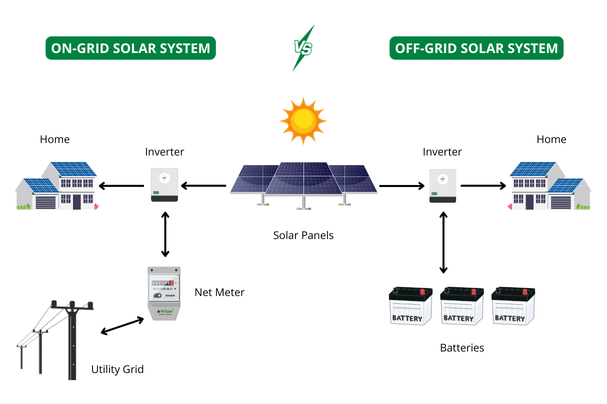
An on-grid system is connected to your local electricity board (also called DISCOM). It works with both solar power and the main electricity line.
How it works:
- Solar panels generate power for your home during the day
- If you produce extra electricity, it goes to the grid
- At night or during cloudy days, you use electricity from the grid
- A net meter keeps track of how much power you give and take
What is an Off-Grid Solar System?
An off-grid system works independently. It is not connected to the electricity board. This system uses solar batteries to store the energy produced during the day. Off-grid systems are mostly used in areas where there is no electricity supply or where power cuts happen frequently.
How it works:
- Solar panels charge the battery
- The battery powers your home even at night
- You don’t get power from the grid
Main Differences Between On-Grid and Off-Grid Solar
| Features | On-Grid | Off-Grid |
|---|---|---|
|
Grid Connection |
Yes |
No |
|
Battery Required |
No |
Yes |
|
Initial Cost
|
Lower |
Higher |
|
Government Subsidy |
Available
|
Not available |
|
Power Backup |
Not available |
Available through battery |
|
Best For |
Homes with stable power supply |
Homes with frequent power cuts |
Which Solar System Should You Choose?
Here’s a simple guide to help you choose:
- Choose an on-grid system if:
- Your area has regular electricity
- You want to reduce your electricity bill
- You want to apply for government subsidy under PM Surya Ghar Yojana
- You don’t need backup during power cuts
- Your area has regular electricity
- Choose an off-grid system if:
- You live in an area with no electricity connection
- You face regular power cuts
- You want to be fully independent from the power grid
- You are okay with a higher upfront cost
- You live in an area with no electricity connection
At MrSolar, we help you choose the right system based on your roof, usage, and budget.
Cost Comparison (Approximate) for On-Grid and Off-Grid
| System Size | On-Grid Cost (After Subsidy) | Off-Grid Cost (With Battery) |
|---|---|---|
|
1 kW |
₹35,000 – ₹40,000 |
₹80,000 – ₹90,000 |
|
2 kW |
₹70,000 – ₹80,000 |
₹1,50,000 – ₹1,60,000 |
|
3 kW
|
₹1,10,000 – ₹1,20,000 |
₹2,20,000 – ₹2,30,000 |
On-grid systems are more affordable and have quicker return on investment.
Final Words
Both on-grid and off-grid solar systems have their own advantages. If your goal is to save on electricity bills and get government subsidy, an on-grid system is the best choice. If your area has frequent power cuts or no electricity at all, then an off-grid system may suit your needs better.
MrSolar helps you decide the right option for your home, and supports you from system design to full installation.
Contact MrSolar now to get a free consultation and make the right solar choice.
Common Questions
Do I get subsidy for off-grid systems?
No. The PM Surya Ghar Yojana subsidy is available only for on-grid systems.
Do I get subsidy for off-grid systems?
No. On-grid systems switch off during power cuts for safety reasons. You will need a battery or inverter for backup.
Can I use a hybrid system?
Yes. A hybrid solar system combines both grid connection and battery backup. It is useful but more expensive.
Which system is easier to maintain?
On-grid systems are simpler and need less maintenance than battery-based systems.